
How to Search the Murray County Court Docket
Start with Minnesota Court Records Online, or MCRO. It is the Judicial Branch's public-access system for district-court records across Minnesota. Pick Murray County when the case belongs here. That filter matters. A statewide sweep can help if you do not know the county. But it also drags in similarly named people from every corner of the state. MCRO costs nothing and needs no registration, though its results are not certified records.
Bring solid details before you search. A full court file number or citation number works best. Name searches are possible too. But pending criminal, traffic, and petty-misdemeanor matters without a conviction may stay hidden from a defendant-name lookup. So lean on the file number whenever you can. Open the Case Details and Register of Actions pages instead of trusting a single search-result line to tell the whole story.
- Accept the MCRO terms and open Case Search, then select Murray County under court locations when the local court is known.
- Use Case Number or Citation Number with the complete number, or enter a person or business name with only reliable filters.
- Review the Case Details page for the case summary, events, hearings, dispositions, and publicly available documents.
- Use Hearing Search or the Murray calendar for current scheduling information, since a Register of Actions and a calendar serve different purposes.
- Ask court administration for a certified, exemplified, older, sealed, or otherwise unavailable record through the proper request route.
Note: A missing digit, the wrong county, or a tight date filter can hide a record the court can still find for you.
Murray County Docket Search Routes
MCRO opens with four public search tabs. Case Search is the everyday starting point for a Register of Actions. Document Search matches public documents to a case number. Hearing Search handles scheduled hearings. Judgment Search covers public docketed monetary judgments plus satisfaction information. Treat each tab as its own route. A hearing result or a document hit is not the same as a full case history.
The official MCRO overview makes clear that access depends on the record category. The public-access rules govern it too. Sessions end after 30 minutes of inactivity, and a warning appears near the end. Exact name searches are allowed. So is a wildcard after at least two characters, along with a Sounds Like option. Wildcard and Sounds Like cannot be combined. A complete number may include or omit dashes and leading zeros, but skip the spaces.
| MCRO route | Useful input | What it reaches |
|---|---|---|
| Case Search | Name, case number, citation number, or attorney | Case Details and the public Register of Actions |
| Document Search | Complete case number | Public documents available for remote access |
| Hearing Search | Name, case number, judicial officer, or attorney | Hearing information with date, category, and location filters |
| Judgment Search | Debtor name | Public monetary judgment and satisfaction detail |
Fill in only what you actually know for a Murray County Case Search. The live interface offers more controls than a plain name box. One shaky filter can screen out the very Murray County result you need. This field inventory serves a Murray County court docket search best.
| Case Search field | Format or choice | Murray County use |
|---|---|---|
| Search mode | Name, Case Number, Citation Number, or Attorney | Use the most complete identifying detail available for the Murray County case. |
| Name | Person or Business; last, first, and optional middle name | Try a careful variant only after an exact Murray County search. |
| Date filters | Exact date or date range in MM/DD/YYYY | Use only when reliable because an incorrect range can hide a Murray County case. |
| Case category | Civil, Criminal, Family, Probate, or Mental Health | Narrow a Murray County search only when the category is known. |
| Court locations | Statewide or selected county court locations | Select Murray County for the local court docket. |
What a Court Docket Shows
Think of the Murray County Register of Actions as the running court record for one case. The Case Details page can show case identification, court location, category, filing date, status, the assigned judicial officer, parties, events, hearings, conditions, financial information, and public dispositions. Some cases carry a document index as well. Careful, though. An index number only signals that a document was recorded, not that every document is downloadable from home.
Context makes each row readable. Hearing rows report scheduled activity; event rows show filings, orders, notices, or case steps. A disposition reports an outcome or judgment entry. Financial information can appear, but it is not a complete payment history. Under Minnesota's access rules, protected addresses, account numbers, and similar data stay off the remote display.
| Case information | File number, category, court location, filing date, status, and assignment information. |
|---|---|
| Parties | Public party roles and representation details, subject to remote-access limits and name protections. |
| Register of Actions | Chronological filings, notices, orders, motions, and other case events. |
| Hearings | Date, time, hearing type, judicial officer, location, and an outcome field where posted. |
| Documents | Public document index entries and downloads only when the record is remotely available. |
| Disposition | Outcome, judgment, or later satisfaction information when the public record provides it. |
Murray County Docket Terms
Search labels run short. That makes them easy to misread. A few terms go a long way toward telling a scheduled event from a decision. They also help you tell a document title from a file you can actually open. The court's vocabulary orbits the Register of Actions, case information, hearings, documents, and dispositions. A calendar is just a current schedule. It never stands in for the event history in the Register of Actions.
- Register of Actions
- The chronological case-event record available through MCRO Case Details when public access permits.
- Setting
- A scheduled court date or hearing event. It may move, be continued, or be absent from a public calendar.
- Disposition
- An outcome or judgment-related entry. It should be read with the surrounding case events.
- Document index
- A listing that identifies a filed document. It does not promise a remote PDF or unrestricted access.
- Name Not Available Online
- An MCRO access notice directing the user to a courthouse public terminal or court administration.
Note: A document, a docket event, and a transcript are separate court products with different request routes.
Which Courts Keep Dockets
Minnesota District Court for Murray County holds original jurisdiction over civil, family, probate, juvenile, criminal, and traffic cases. Those are the cases filed in the county. Murray County District Court Administration keeps the local case record. Conciliation Court sits inside the district court as a division for qualifying lower-dollar civil claims. Murray County runs no separate justice-court or municipal-court docket system.
City hall records are a different animal. Ordinances, council minutes, licenses, and utility files live with the municipal governments that created them. Those can flag a local-government issue. But they never replace a filed court case or its Register of Actions. Federal cases sit outside this system too. The U.S. District Court for the District of Minnesota and PACER own those, not MCRO.
| Court or record system | What it covers | Where to start |
|---|---|---|
| Murray County District Court | Civil, family, probate, juvenile, criminal, and traffic matters filed in Murray County | MCRO or Murray County District Court Administration |
| Conciliation Court division | Qualifying lower-dollar civil claims within the district court | MCRO and district court administration |
| City government offices | Ordinances, minutes, licenses, and other municipal administration records | The relevant city clerk or city website |
| Federal court | Federal cases, not Minnesota state-court cases | PACER and the District of Minnesota |
Murray County Court Record Counter
The physical point for Murray County court records is the Murray County Courthouse. It sits at 2500 28th Street in Slayton. Court Administrator Sheila Pierson heads local court administration. The phone number is (507) 873-7001. Regular hours run Monday through Friday, 8:00 a.m. to 4:30 p.m. Free surface-lot and on-street parking are listed by the Judicial Branch. Call ahead when a file is older, large, confidential, or needs certification.
The City of Slayton's official history places county government, court administration, and law-enforcement offices at the south end of Broadway. That is in the county seat. City Hall and court administration do different jobs. City Hall routes municipal-government records; court administration holds the district-court case record. The court counter cannot give legal advice or change a judicial order by phone.
Slayton's official city page describes the county-seat setting. That is the backdrop for this Murray County court docket access point.
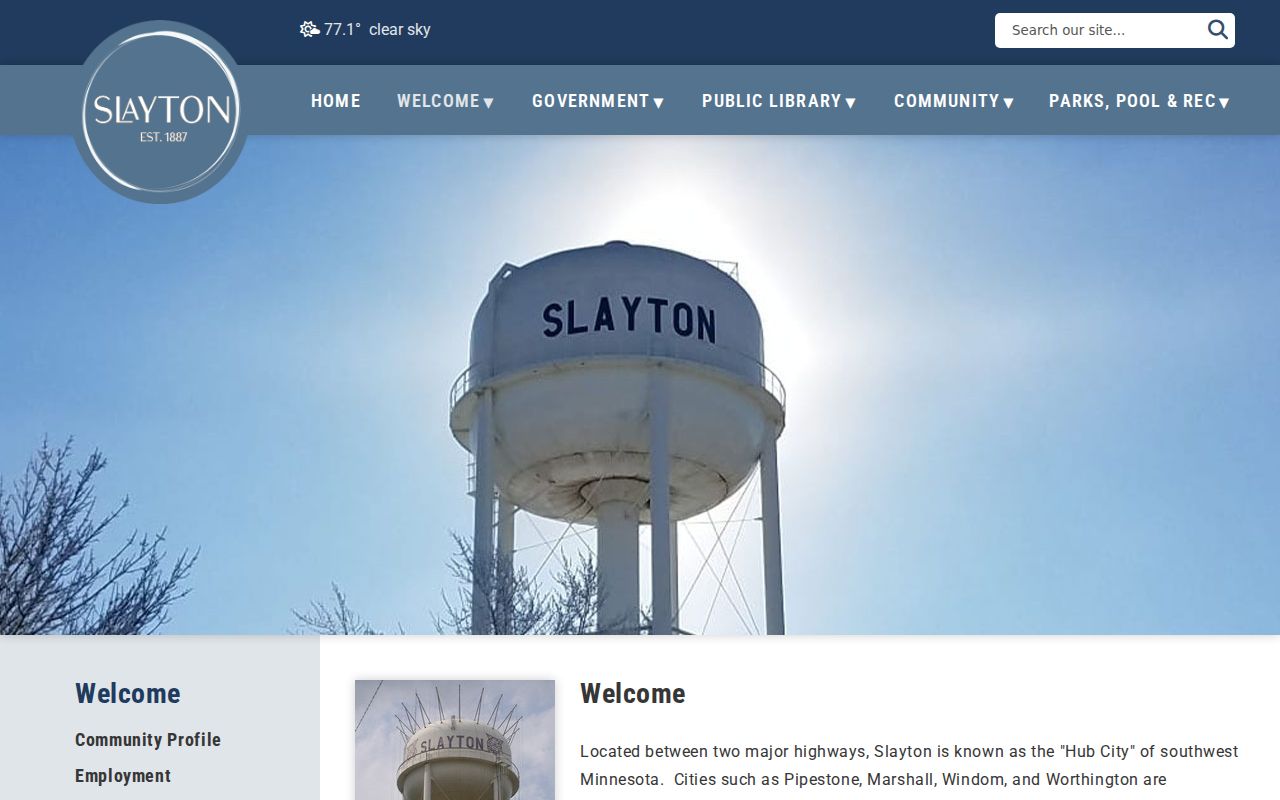
Why does the Slayton counter matter so much? Murray County court records live there even when the case started in a different Murray County city, since one file can cover a citation or municipal issue from anywhere in the county.
Finding Court Dates and Settings
For a current Murray County court date, two free tools cover most needs. The Murray weekly public court calendar is a searchable PDF of scheduled hearings. Each row shows date, time, and case number. Case type or style, hearing description, courtroom, and judicial officer appear there too. MCRO Hearing Search is the other route. It searches by name, full case number, judicial officer, or attorney, with filters for date, category, and the Murray County location.
Check both before relying on either. If they disagree, call court administration for the setting that controls. One caution matters here. A calendar row is schedule information. It is not the Register of Actions, and a case with no row that day has not vanished. The case docket itself holds the fuller event history. The full Murray County court calendar page walks through these local routes in more detail.
Murray County Court Docket Calendar
The Murray court page posts the weekly calendar at 7:00 a.m. each business day. It refreshes the posting hourly. Confidential and non-remotely-accessible cases stay off the posting. So a missing hearing is not proof of cancellation. Judge assignments, courtroom assignments, and scheduled-case details can all shift. The printed calendars outside courtrooms and in public lobbies are described as the most current daily information.
When a hearing seems changed or unclear, open the live PDF and MCRO Hearing Search first. Then call court administration with the case number and hearing date if you have them. Want to appear remotely or in person? The state's OTH1002 form makes that request, and a judge decides it. Editing a calendar entry does nothing. Fifth Judicial District guidance calls continuances strongly disfavored and normally requires a written good-cause request.
The Fifth Judicial District overview shows the district that administers the Murray County court. It also shows its operations.
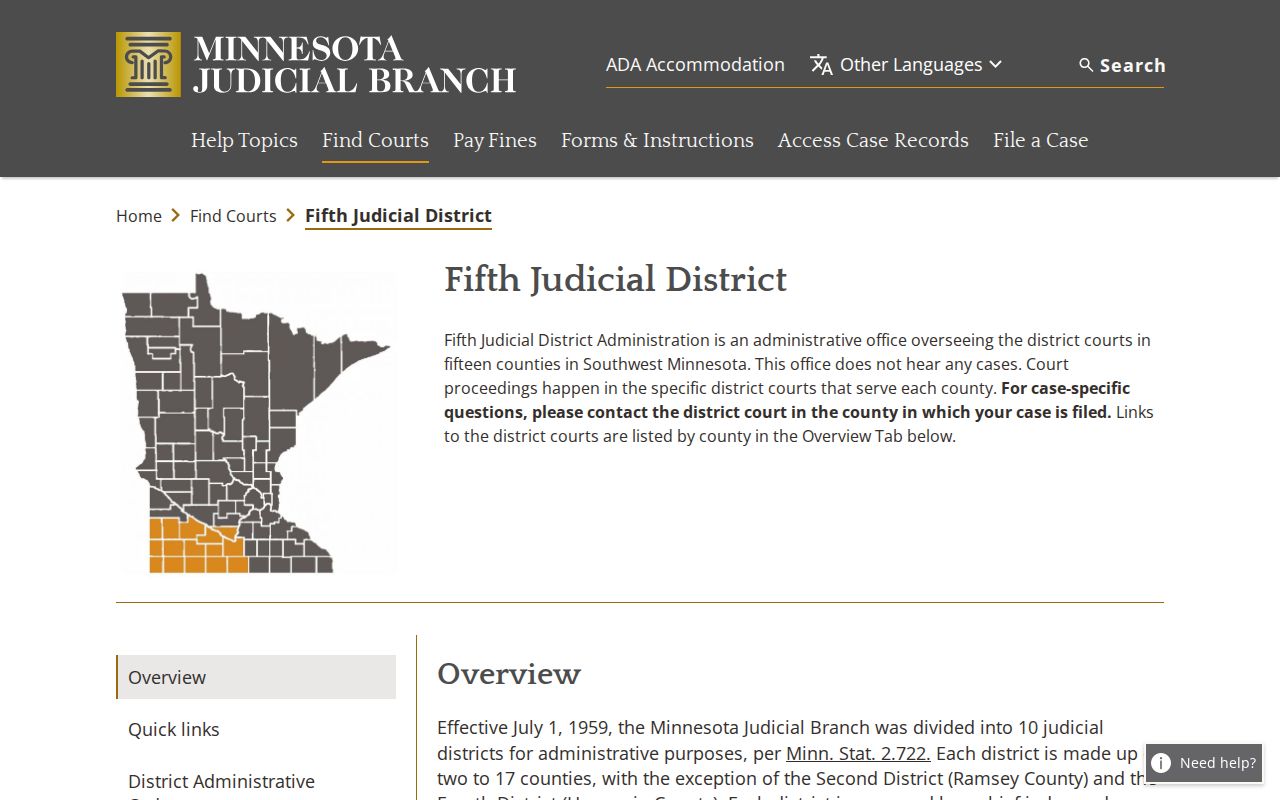
The district layer handles administration and policy. A current Murray court date still needs the local calendar and a call to court administration. Note: a remote-appearance request is only a request, never approval to skip an in-person setting.
Public Access to Dockets
Minnesota court records open through court-specific public-access rules. There is no general county-records shortcut. Remote access can be narrower than walking into the courthouse. Where access is allowed, public records may be inspected or copied during regular hours. A Minnesota courthouse public terminal can display material MCRO withholds. Sealed and confidential restrictions still apply at that terminal.
The remote limits bite hardest for juvenile, family, civil-commitment, domestic-abuse, harassment, and other protected categories. Public hearing and trial exhibits are not remotely accessible. A "Name Not Available Online" result means the remote interface is withholding the name. It does not mean the case is missing. Use the local terminal. Or ask court administration for the lawful access route.
Key Minnesota access authorities:
Minnesota Rule of Public Access 8 governs inspection, copying, remote access, public calendars, protected fields, and the distinction between courthouse and online access.
Minnesota Rule of Public Access 4 identifies inaccessible records and protective restrictions, including protected case categories.
Minn. Stat. § 357.021 supplies the court-fee framework for copies and special court products.
Minn. Stat. § 260B.171 limits juvenile-record access except where the statute or a court order permits it.
Murray County Docket Access Limits
A blank docket search result can mean several things. A wrong county sinks the search. So does a misspelled name, an off date range, a wrong category, or an incomplete case number. Pending criminal, traffic, and petty-misdemeanor matters without conviction may not surface through defendant-name search. Some older records have limited remote document access, especially before July 1, 2015. Restricted family, juvenile, and civil-commitment categories follow their own access rules.
Work the narrowest reliable route instead. Start with Murray County and a complete case or citation number. Drop any uncertain filter. Read the access notice. If the category allows in-person viewing, use a Minnesota courthouse public terminal. Certified, exemplified, confidential-party, sealed, older, or restricted records need another step. Contact Murray County District Court Administration. You can also submit the statewide copy-request form for a product the law allows. And never read a blank result as proof of dismissal, acquittal, conviction, expungement, or any outcome.
The official MCRO access page explains each remote-access limitation. When remote search cannot supply a needed public record, the courthouse remains the local route.
The Clerk and Docket Records
Murray County does not run an independently elected county clerk for these court records. It uses unified Minnesota Judicial Branch court administration. Murray County District Court Administration maintains the district-court case record and docket. The office fields questions on public case access, current hearings, copies, certification, local filing, and the public terminal. It cannot give legal advice or promise what a case search will show.
Plain public documents may come free through MCRO. A formal copy request uses the statewide form, which separates plain, certified raised-seal, exemplified-signature, and certified-and-exemplified products. The local fee page lists the costs. A certified raised-seal copy is $14. Exemplified signatures run $14, and certified and exemplified copies run $28. Inspection is generally free where public access allows. A printout from MCRO is not certified.
Murray County District Court Administration
2500 28th Street
Slayton, MN 56172
(507) 873-7001
Monday–Friday, 8:00 a.m.–4:30 p.m.
Counter service can often fill an in-person request the same day. Off-site storage, large requests, special certification, transcripts, and restricted files can take longer. Mail, eFS, and the counter each serve as a request route in the right circumstances. Remember that eFS handles filing and service, not public docket search.
Murray County Records From Currie
Older listings for Murray County sometimes point to Currie, and there is a reason. The county built its first courthouse there in 1872. That town held the records until a county-seat fight ended. Everything moved to Slayton in 1887. The shift became official in 1889. A Romanesque Revival courthouse followed in 1892, and later county-building work in 1974 and 1981 replaced it. Today's court docket files sit in Slayton, not Currie.
History is one thing; a working docket search is another. The official courthouse history gives background, not an archive of old case records. For an aged file, ask court administration where the earliest index lives. Ask whether it is stored off-site. Find out if staff can copy or certify it. MCRO's digital holdings are not a full historical Murray County docket either.
The Minnesota Judicial Branch treatment-court page lists the Pipestone-Murray Adult Drug Court. It meets at the Slayton courthouse.
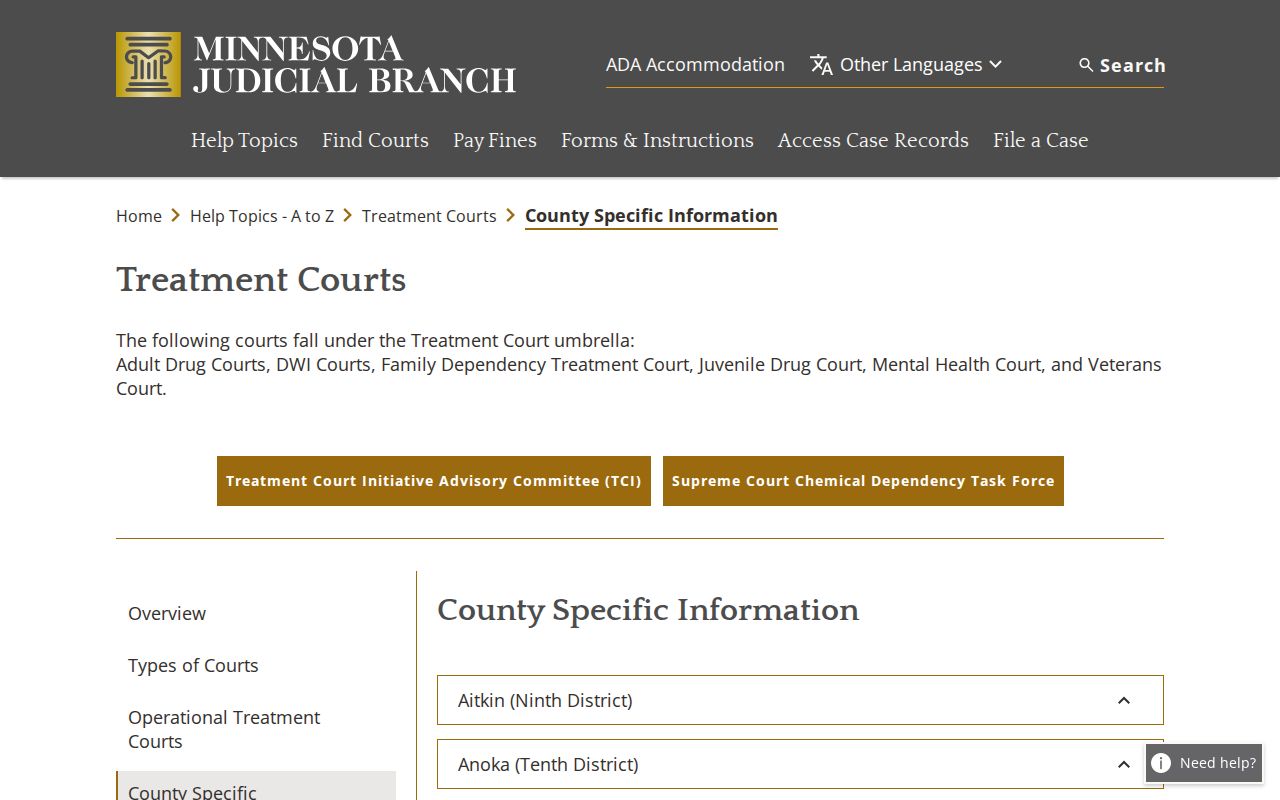
The treatment court spans more than one county, so it is a program route rather than a separate docket source. Check any public case event through MCRO or court administration, keeping access limits in mind.
Court Dockets by City in Murray County
By the 2020 Census incorporated-place table, Murray County's five largest cities rank in order. Slayton leads. Then come Fulda, Chandler, Lake Wilson, and Currie. A city clerk keeps municipal material such as ordinances, minutes, and licenses. These cities operate no separate municipal-court docket database. Any filed court case belongs to Murray County District Court Administration and MCRO.
So take the city route for a municipal record. Take the court route for a case file. The split matters most with ordinances and citations. An ordinance shows local rule language. The Register of Actions shows the public history of a filed case where access is permitted.
Slayton Court Docket
2020 Census population: 2,013. County-seat city and location of Murray County District Court.
Fulda Court Docket
2020 Census population: 1,371. City clerk records and the district-court route remain separate.
Chandler Court Docket
2020 Census population: 279. No Chandler-specific official online docket was located.
Lake Wilson Court Docket
2020 Census population: 254. City ordinances and district-court cases use different record channels.
Currie Court Docket
2020 Census population: 224. Current court records are held in Slayton, not at Currie City Hall.
The official 2020 Census incorporated-place table provides the population ranking behind these Murray County city docket routes. It is a federal count of incorporated places, not a court record.
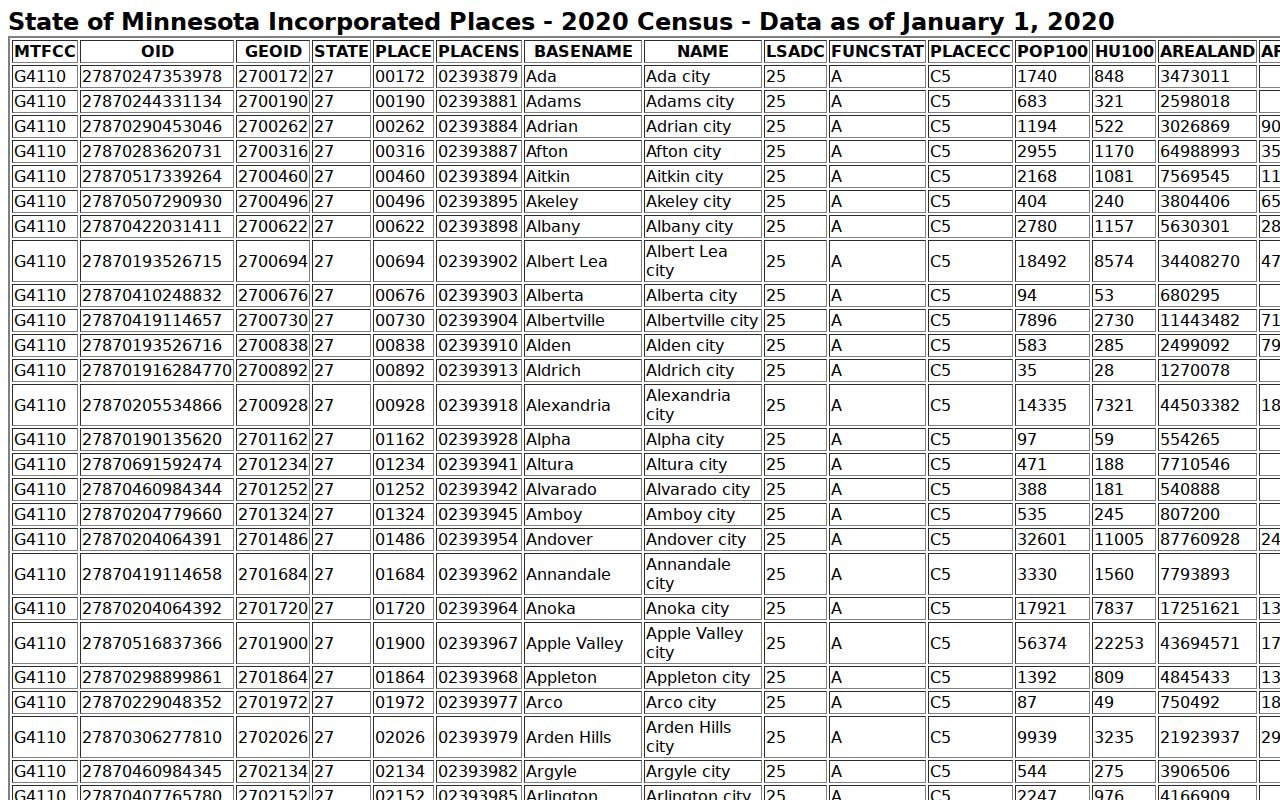
Population rank identifies the city pages, not court volume or a separate city-court system.
Murray County City Court Dockets
Need a city office? Slayton City Hall, Fulda's city clerk, Lake Wilson's city office, and Currie City Hall are solid municipal-government contacts. Chandler posts no current official city-office portal. So assume no city phone number or address for it. None of that changes the court fallback for anything filed in district court. A Murray County district-court case is searched through MCRO. It is handled locally through Murray County District Court Administration.
Start by sorting out what you actually need before you call anyone. Is it a city ordinance, a council action, or a license? Then ask whether a case was filed in district court. The public calendar, MCRO Case Search, MCRO Hearing Search, the courthouse terminal, and court administration each answer a different piece of that question. No separate municipal court docket exists for these cities.
Note: A city calendar or agenda is a municipal schedule. It is not a judicial calendar and not a Register of Actions.
Map and Directions to the Murray County Courthouse
Murray County District Court Administration keeps the county's district-court case files at the Murray County Courthouse, 2500 28th Street in Slayton. The office handles filing, public-terminal access, certified copies, and courtroom logistics for civil, family, probate, juvenile, criminal, and traffic matters, and it seats the Fifth Judicial District's shared-judge calendar, so confirming a hearing before arrival is worthwhile.
Murray County Courthouse
2500 28th Street
Slayton, MN 56172
(507) 873-7001
Monday–Friday, 8:00 a.m.–4:30 p.m.
Free surface-lot and on-street parking serve the courthouse. The service counter stops taking payments after 2:30 p.m. on the last working day of each month, though the Court Payment Center stays open for fines. Calling Court Administration first confirms a file is ready before the drive to Slayton.